

Emirates unveils new amenity kits spotlighting endangered species on long-haul flights
Collectible designs created with United for Wildlife
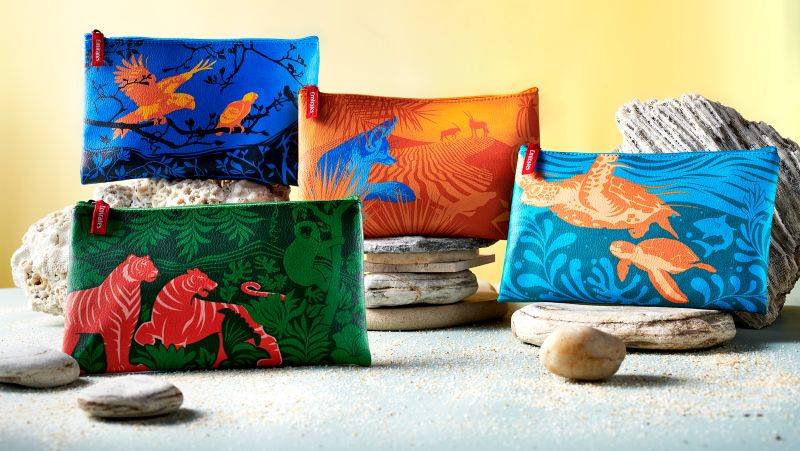
DUBAI – Emirates has introduced a new collection of complimentary amenity kits for Premium Economy and Economy Class customers on long-haul flights worldwide, with onboard availability beginning in December.
The airline said the new range has been designed as a series of collectible keepsakes that highlight some of the world’s most endangered wildlife species, combining sustainability-led materials with educational storytelling.
The new amenity kits have been created in partnership with United for Wildlife, an initiative founded by HRH Prince William and The Royal Foundation, and are intended to draw attention to the impact of illegal wildlife trade while celebrating global biodiversity. Emirates said the kits form part of its wider environmental sustainability framework and long-standing commitment to conservation.
Crafted from bio-based materials, including cactus-derived alternatives, the new pouches are described as buttery-soft and reusable. Each bag features hand-drawn artwork inspired by nature and includes a story card that provides insight into the species represented. Emirates said the collection has been designed to encourage reuse beyond the flight while offering passengers a tangible connection to wildlife conservation efforts.
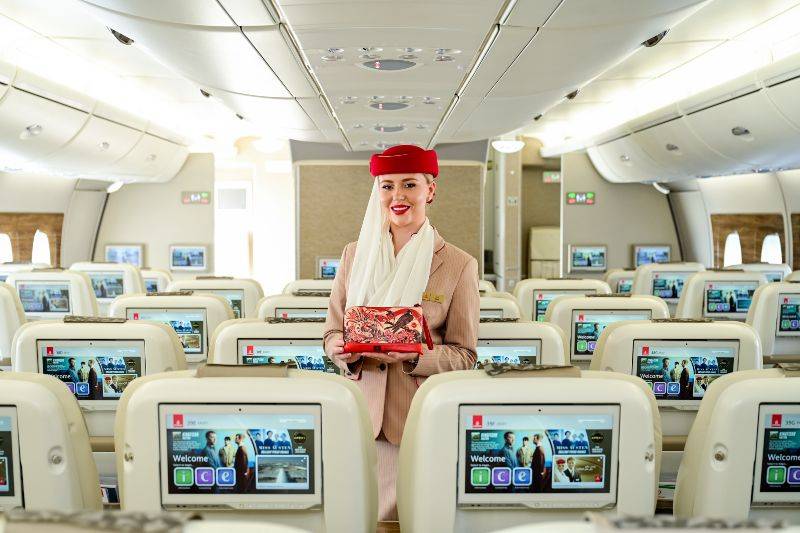
For the first time since the introduction of Premium Economy in 2021, Emirates has also launched a dedicated amenity kit exclusively for the cabin, featuring wellness products from plant-powered beauty brand Aveda.
New amenity kits
The amenity kits showcase endangered animals across four natural environments: sea, sky, forest and desert. Emirates and United for Wildlife are jointly highlighting a wide range of species affected by poaching, trafficking and habitat loss, reflecting the global scale of wildlife crime.
The species featured across the collections include African grey parrots, Arabian gazelles, Arabian oryx, Asian black bears, Bengal tigers, blue sharks, Bornean orangutans, Cape vultures, chimpanzees, fennec foxes, geckos, gibbons, glass frogs, green sea turtles, manta rays, painted bats, pangolins, peregrine falcons, red sand boas, small-clawed otters, straw-headed bulbuls, totoaba and western gorillas.
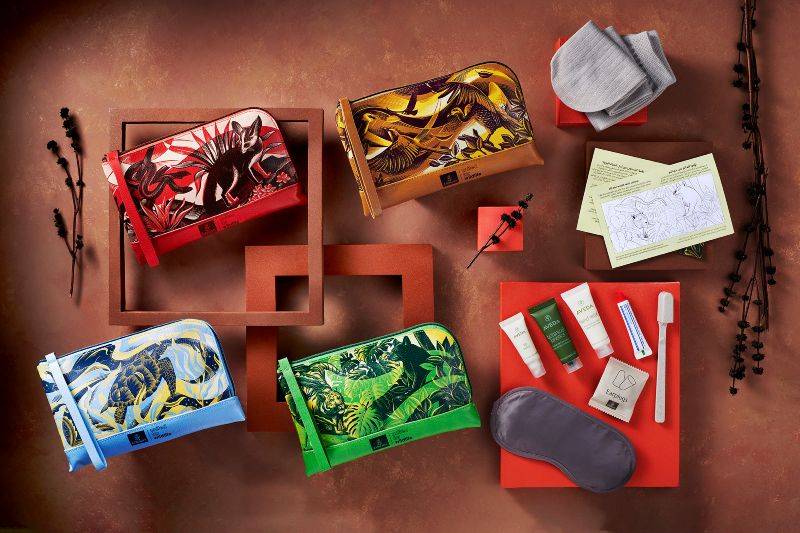
Each kit contains a printed card that explains the ecological role of the featured species, the threats it faces, and why conservation efforts are critical to its survival. Emirates said the educational component is intended to raise awareness among travellers while supporting global conservation messaging.
Passengers can also learn more about United for Wildlife and its mission through Emirates’ award-winning inflight entertainment system, ice. The airline is showcasing the documentary series Guardians, which profiles wildlife rangers and conservationists working on the front lines to protect endangered species and disrupt criminal trafficking networks.
Premium Economy kits
The 2025/26 Premium Economy amenity kits mark the first time the cabin has received a bespoke bag design, reflecting Emirates’ continued investment in the relatively new travel class. The generously sized pouch includes a wrist strap and is designed for reuse beyond the flight.
Each Premium Economy kit contains travel and wellness essentials including soft socks, eyeshades, earplugs and a Colgate dental kit. In addition, customers receive a curated selection of Aveda products, including lip balm, hand relief moisturising cream and hydrating face lotion.
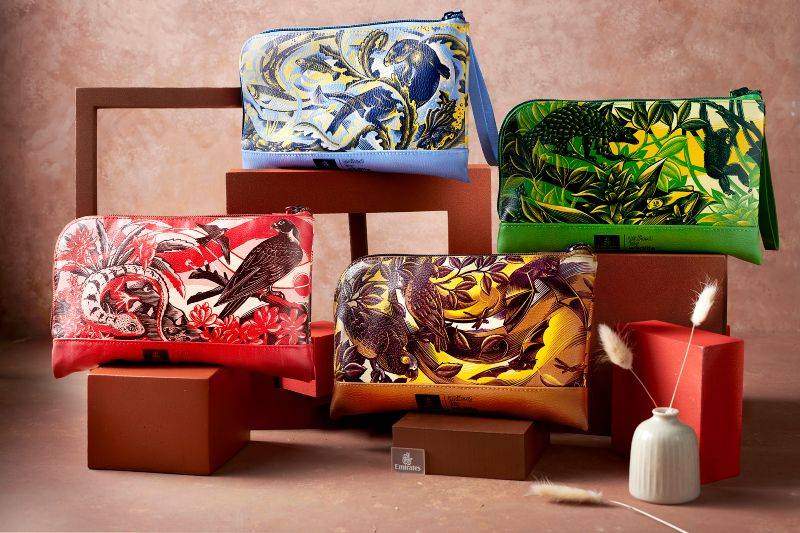
Emirates said the socks and eyeshades are made from 100% recycled post-consumer polyester, while the earplug packaging and story cards are produced using paper sourced from responsibly managed forests.
Available on overnight flights of longer duration, the Premium Economy kits feature hand-drawn artwork depicting endangered species such as pangolins, glass frogs, chimpanzees, Bengal tigers, Asian black bears, totoaba, small-clawed otters, manta rays, green sea turtles, geckos, peregrine falcons, red sand boas, fennec foxes, African grey parrots, painted bats, straw-headed bulbuls and Cape vultures.
Economy Class kits
Emirates’ new Economy Class amenity kits have been designed as colourful keepsakes, offering essential comfort items for long-haul travellers. Like the Premium Economy range, the Economy kits are available on overnight flights of longer duration.
Each kit contains soft socks, eyeshades, earplugs and a Colgate dental kit. Emirates confirmed that the socks and eyeshades are made from 100% recycled post-consumer polyester, while the paper-based packaging and story cards are sourced from responsibly managed forests.
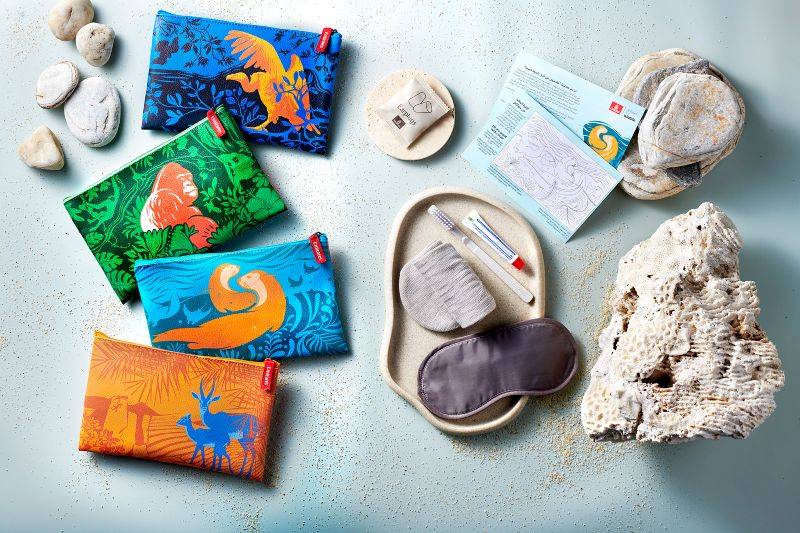
The Economy Class collection highlights a different selection of endangered species through hand-drawn artwork and accompanying story cards. Featured animals include Arabian gazelles, Arabian oryx, blue sharks, western gorillas, gibbons, Bornean orangutans, Bengal tigers, Asian black bears, small-clawed otters, manta rays, green sea turtles, peregrine falcons, fennec foxes, African grey parrots and Cape vultures.
Emirates said the use of storytelling within the kits is intended to create a meaningful connection between passengers and wildlife conservation, while maintaining comfort and functionality onboard.
Sustainability framework
The new amenity kits form part of Emirates’ broader environmental sustainability framework, which includes a strong focus on combatting illegal wildlife trade. The airline is an active member of the United for Wildlife Transport Taskforce and has adopted a zero-tolerance policy towards the illegal trade of wildlife and wildlife products.
Through its freight division, Emirates SkyCargo has implemented a complete ban on the transport of hunting trophies from elephants, rhinoceros, lions and tigers. The airline has also reinforced its environmental credentials through independent certification.
In June 2023, Emirates achieved IATA Environmental Assessment (IEnvA) Stage One certification, alongside the IEnvA Illegal Wildlife Trade module, underscoring its commitment to environmentally responsible practices across its operations.
United for Wildlife partnership
United for Wildlife was founded in 2014 by HRH Prince William and The Royal Foundation with the aim of making it impossible for traffickers to transport, finance or profit from illegal wildlife products. The initiative works closely with transport and finance sectors, law enforcement agencies and non-governmental organisations to disrupt criminal networks operating across borders.
By sharing intelligence, strengthening partnerships and aligning industry standards, United for Wildlife seeks to close the routes used by traffickers and reduce demand for illegal wildlife products globally.
Emirates said its partnership with United for Wildlife reflects a shared objective to raise awareness, drive behavioural change and support conservation efforts through education and industry leadership.
Endangered species in spotlight
The amenity kits highlight a diverse range of animals affected by illegal trade, habitat loss and exploitation.
- African grey parrots are among the most trafficked birds globally, driven by demand within the exotic pet trade and traditional medicine. Known for their exceptional intelligence, they can develop extensive vocabularies and form strong social bonds.
- Arabian gazelles and Arabian oryx face threats from illegal hunting and exotic animal collections. The Arabian oryx represents one of the region’s most significant conservation successes, having been reintroduced into the wild after extinction.
- Asian black bears, also known as moon bears, are targeted for their gall bladders, claws and teeth, while Bengal tigers continue to be poached for their skins, bones and body parts used in traditional medicine.
- Marine species such as blue sharks, manta rays and green sea turtles are heavily impacted by demand for fins, gill plates, shells and meat. Green sea turtles play a vital ecological role in maintaining seagrass ecosystems and rely on magnetic navigation to return to nesting beaches across 80 countries.
- Forest-dwelling species including Bornean orangutans, chimpanzees and western gorillas face pressure from the exotic pet trade and bushmeat hunting. Orangutans share approximately 97% of their DNA with humans and act as key seed dispersers, while chimpanzees and gorillas demonstrate complex social structures and tool use.
- Smaller species such as pangolins, glass frogs, geckos and red sand boas are increasingly targeted due to myths, traditional beliefs and demand among collectors. Pangolins remain the most trafficked mammals globally, hunted for their scales and meat.
- Bird species including peregrine falcons, Cape vultures and straw-headed bulbuls face threats from live trade, poisoning and habitat loss. Peregrine falcons are celebrated as the fastest animals on Earth and a symbol of conservation recovery, while straw-headed bulbuls have been pushed to critically endangered status due to demand for their song.
- Painted bats and totoaba illustrate how ornamental trade and luxury demand can rapidly push species towards extinction, with totoaba poaching also threatening the critically endangered vaquita porpoise through bycatch.